
Havospark Mini Jet Boat
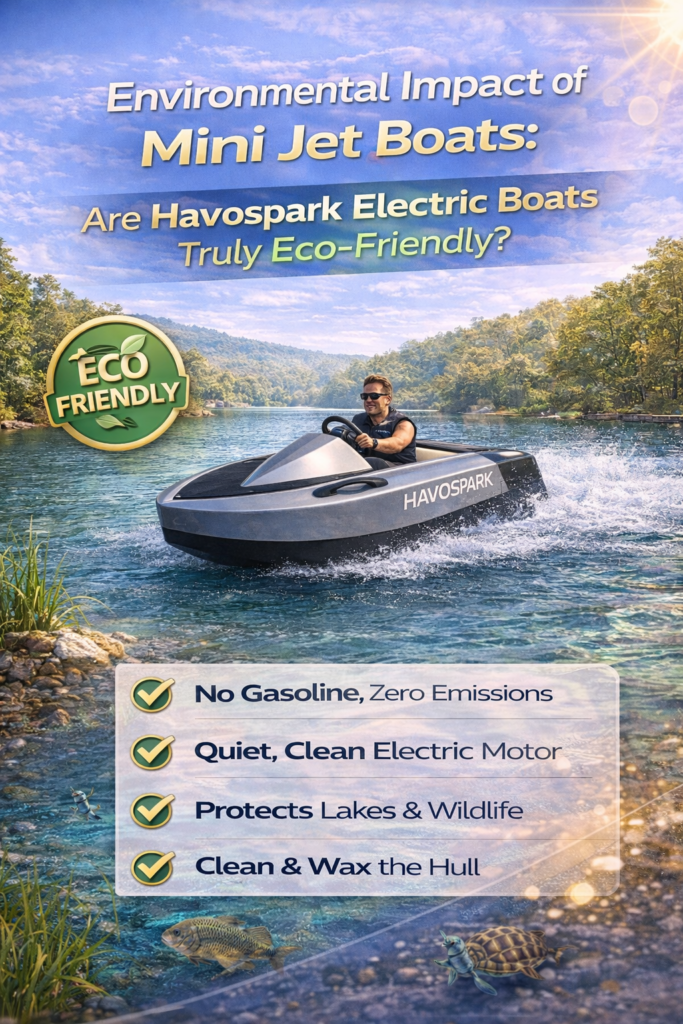
Environmental Impact of Havospark Mini Jet Boat: Are Havospark Electric Boats Truly Eco‑Friendly?
Apr
Electric watercraft are gaining attention from boaters who want more fun on the water with less environmental impact. Among the most talked-about options are mini jet boats, especially compact electric models like the Havospark mini jet boat. These boats promise quiet operation, no fuel spills, and lower maintenance, which makes them appealing to lake associations, homeowners, and eco-conscious riders.
But are they truly eco-friendly? The answer is not simply yes or no. While a Havospark jet boat can reduce direct emissions and noise compared with gasoline-powered boats, its overall environmental footprint depends on battery production, charging source, materials, and how it is used. In this article, we’ll break down the real environmental impact of electric mini boats and help you decide whether a mini jet boat for sale is the right choice for your lifestyle and values.
What Makes Electric Boats Different
Traditional boats powered by gasoline engines produce exhaust, fuel odor, and potentially harmful spills. They also create engine noise that can disturb wildlife, neighbors, and other lake users. Electric boats, including the Havospark mini boat, operate differently because they rely on rechargeable batteries and electric propulsion rather than fossil fuels.
That shift has several advantages. First, electric drive systems produce zero direct exhaust emissions while on the water. Second, they often run much more quietly than combustion-powered alternatives. Third, electric motors are typically more efficient, converting a larger share of stored energy into motion. These benefits are part of why eco-friendly mini jet boats are becoming more popular in recreational boating.
Environmental Benefits
One of the biggest advantages of a Havospark mini jet boat is that it does not burn gasoline while in use. This means there are no tailpipe-style emissions released directly into the air over the lake or river. For communities trying to reduce noise and pollution, that is a meaningful improvement over many conventional small boats.
Electric boats also reduce the risk of fuel leaks and oil contamination. Gas-powered boats can release hydrocarbons during refueling, transport, and operation, especially if they are older or poorly maintained. A Havospark jet boat avoids many of those risks because it uses battery power instead of fuel tanks, carburetors, and engine oil systems. That makes it a cleaner option for freshwater environments.
Another advantage is noise reduction. Quiet operation helps protect wildlife and can make boating more enjoyable for families and anglers. Lake associations often value this because lower sound levels reduce disturbance along shorelines and in shared recreation areas. For that reason, mini jet boats are often seen as a more community-friendly choice than louder fuel-powered craft.
Where the Impact Still Exists
Even though electric boating is cleaner during operation, it is not completely impact-free. Batteries require raw materials such as lithium, nickel, and other mined components. The extraction and processing of these materials can have environmental costs, including energy use, habitat disruption, and industrial waste. This is true for nearly all battery-powered products, not just boats.
Charging also matters. If a Havospark mini boat is charged using electricity generated from coal or other carbon-intensive sources, then the boat’s indirect emissions are higher than if it is charged with solar or a cleaner regional grid mix. So while the boat itself produces no direct exhaust on the water, the electricity source affects the total footprint.
Manufacturing is another factor. Every mini jet boat for sale has embodied emissions from materials, assembly, shipping, and packaging. Lightweight design can help reduce transport impacts somewhat, but buyers who want a truly lower-impact choice should think about the full lifecycle, not just on-water use. In other words, the environmental benefit is real, but it is strongest when the boat is used efficiently and charged responsibly.
How Havospark Compares
The Havospark mini jet boat stands out because it is designed as a compact electric watercraft with a modern propulsion system. Compared with a gasoline-powered personal watercraft, it can be much quieter and cleaner in day-to-day operation. For riders who spend time on lakes, private waterways, or regulated recreational areas, those qualities can be a major advantage.
From an environmental perspective, the biggest strengths of a Havospark jet boat are its lack of direct fuel combustion and its lower noise profile. That makes it attractive for users who want to enjoy water sports without the same emissions and disturbance associated with conventional engines. If your goal is to reduce the immediate footprint of boating, a model like this is a strong step in the right direction.
At the same time, “eco-friendly” should not be read as “impact-free.” Buyers comparing mini jet boats should ask about battery life, charging efficiency, disposal options, and manufacturer support. A well-built electric craft that lasts longer and needs fewer replacements is usually the more sustainable choice over time.
Best Practices for Lower Impact Boating
If you want to make your boating habits more eco-conscious, the way you use the boat matters almost as much as the boat itself. Start by charging with cleaner electricity whenever possible, such as from solar panels or a utility plan with renewable energy options. That can significantly reduce the indirect emissions associated with your Havospark mini jet boat.
You should also avoid overcharging or replacing batteries too early. Proper battery care can extend lifespan and reduce waste. Store the boat and battery according to the manufacturer’s instructions, and recycle battery components through approved programs when the time comes. This matters because the sustainability of electric boating improves when equipment stays in use longer.
Another helpful habit is to follow local boating rules and avoid sensitive habitats. Even quiet watercraft can disturb nesting areas, shallow vegetation, or protected shorelines if operated carelessly. Responsible operation helps the environmental case for eco-friendly mini jet boats stay strong in the eyes of lake associations and local communities.
Who Should Consider One
A Havospark mini boat may be a good fit if you want a low-noise, low-direct-emission way to enjoy lakes, rivers, or private waterfront property. It is especially appealing for people who value recreation but also want a smaller environmental footprint. Lake-house owners, eco-conscious families, and operators in no-wake or noise-sensitive zones may find it especially practical.
It can also make sense for buyers comparing a mini jet boat for sale against larger, fuel-burning personal watercraft. If your priorities include cleaner operation, easier maintenance, and quieter outings, electric is often the better fit. If you are seeking long-distance range or long hours far from charging access, however, you may need to weigh the tradeoffs carefully.
For many users, the appeal is not just environmental. A Havospark jet boat also offers a modern boating experience that feels premium, compact, and efficient. That combination of performance and cleaner operation is what makes these boats so compelling in today’s market.
FAQ
Are Havospark mini jet boats truly eco-friendly?
They are more eco-friendly than gasoline-powered boats in terms of direct emissions and noise, but they still have environmental impacts from battery production, charging electricity, and manufacturing.
Do electric mini boat emissions exist?
Yes, but mostly indirectly. Electric boats produce no exhaust while operating, yet their total emissions can come from power generation, battery production, and transportation.
Are mini jet boats better for lakes?
In many cases, yes. Their quieter operation and lack of direct fuel combustion make them a better fit for noise-sensitive or environmentally conscious lake communities.
What should I look for in a mini jet boat for sale?
Check battery life, charging time, warranty, materials, service support, and whether the model is designed for efficient long-term use.
Can charging a Havospark mini boat be made greener?
Yes. Charging with solar power or a cleaner electricity mix can reduce the indirect emissions associated with ownership.
CTA
If you are researching eco-friendly mini jet boats, the Havospark mini jet boat deserves a close look. It offers a quieter, cleaner alternative to traditional boating while still delivering the excitement many riders want on the water. For buyers seeking a mini jet boat for sale that balances fun, performance, and environmental responsibility, this is a strong option to consider.
Explore the latest Havospark mini boat models, compare features, and choose the version that best fits your lake, lifestyle, and sustainability goals.
